Sump Pump Failure Cleanup in Atkinson, NH
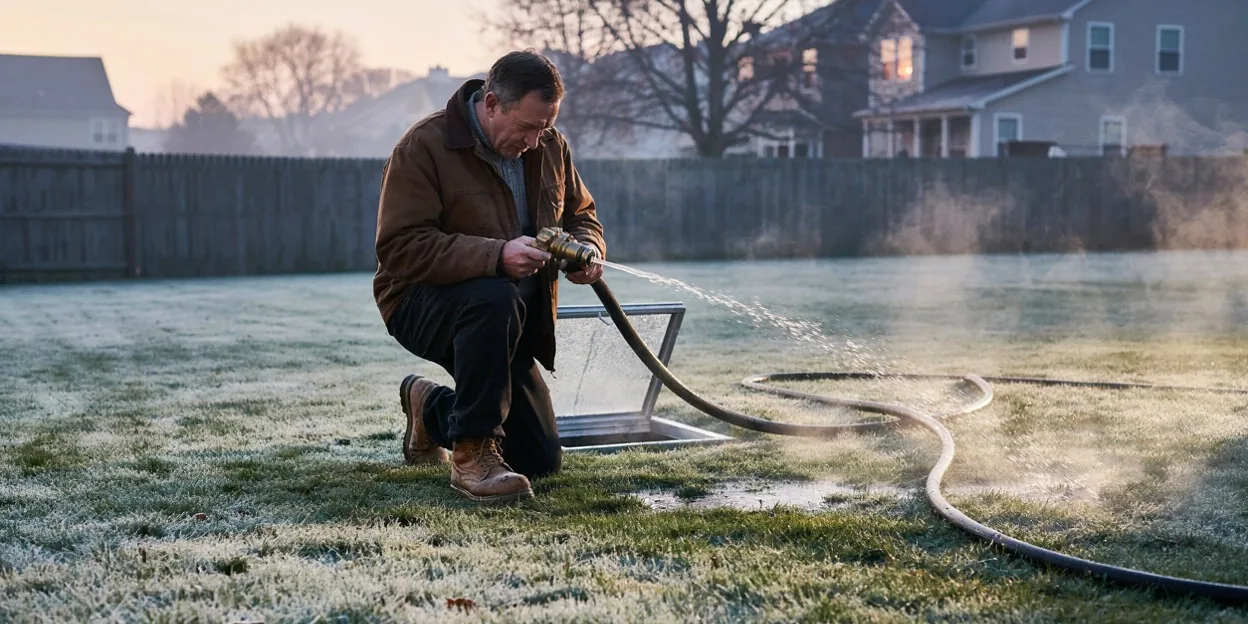
The power went out at nine in the March rainstorm, and the pump in the pit stopped with it. When the lights came back at two in the morning the pit had already overflowed, and the carpet in the finished half of the basement was wet from wall to wall. We connect you by phone with an independent local provider who does sump pump failure cleanup in Atkinson and across Rockingham County.
What the crew does first
The crew gets the water level down first, with their own pump if yours is still dead, and then finds out what the pit was catching. A sump pit in an Atkinson basement is usually fed by a perimeter drain around the footing, so when the pump quits, the water that had been leaving under the slab comes up through the joint and the pit at once. The crew wants to know how high it got and for how long.
Then they meter the finished layers. Carpet and pad over the slab, drywall on the stud walls, the bottom of the stairs, the door casings, the platform under the furnace. Pumping the basement out does not dry any of that. Air movers and dehumidifiers go in by the readings, and the crew comes back until the numbers meet the target.
What to do in the next hour
Stay out of the water if the panel, the furnace, or a power strip is wet. If the power is on and the pump is quiet, check the plug and the float before assuming the motor is gone. A float wedged against the pit wall is a common cause. Do not reach into a full pit with the power on.
Get anything you can lift up off the floor and onto the stairs. Pull area rugs up and out. Photograph the water line on the walls and the pit. Then make the call. A plumber or a handyman replaces the pump. The cleanup crew dries the basement, and the two jobs happen the same week.
What is usually saved and what is not
The slab and the block dry in place. The framing usually does too. Carpet can sometimes be saved if it was clean groundwater and the crew gets to it quickly. The pad under it almost never is. Drywall that sat in water comes out along the bottom so the cavity and insulation can be dried or removed. Paneling on furring strips is a maybe.
Stored belongings are sorted by material. Cardboard, particleboard, and upholstered items that sat in water usually go. Plastic bins and metal shelving wipe down. Ask the crew before anything with sentimental value goes to the curb. Once the extraction is done, structural drying is the rest of the job.
Rockingham County notes
Nearly every house in Atkinson, Danville, and Hampstead built since the 1970s has a sump pit, because the ledge keeps groundwater close to the surface and the perimeter drain needs somewhere to go. The pump runs hardest from March through May, when the frost goes out and the spring rain lands on ground that is already full. That is also when outages come with wind and ice.
The storms that fill basements here are the ones that combine rain with melt or with a power outage. The Mother's Day storm of May 2006 and the Patriots' Day nor'easter of April 2007 each put more than six inches of rain on Rockingham County and knocked out power at the same time, and pumps in Plaistow, Atkinson, and Salem stopped in the middle of the highest water in a generation. A battery backup or a water-powered backup pump is the fix most homeowners make after the first loss.
Many policies exclude groundwater and require a separate endorsement for sump pump failure or drain backup. Nobody on this site can tell you what your policy carries. Ask the crew to note the pit, the water line, and the cause of the failure in writing on the first visit. If the water came through the foundation rather than the pit, see basement flooding cleanup.
Calling about sump pump failure cleanup
Say how deep the water is, whether it is still rising, and whether the power is on. Say whether the basement is finished, what is stored down there, and whether the pump has been replaced or is still dead. Say if the power to the basement has been shut off. Call (603) 665-0909 and tell us what you see.